
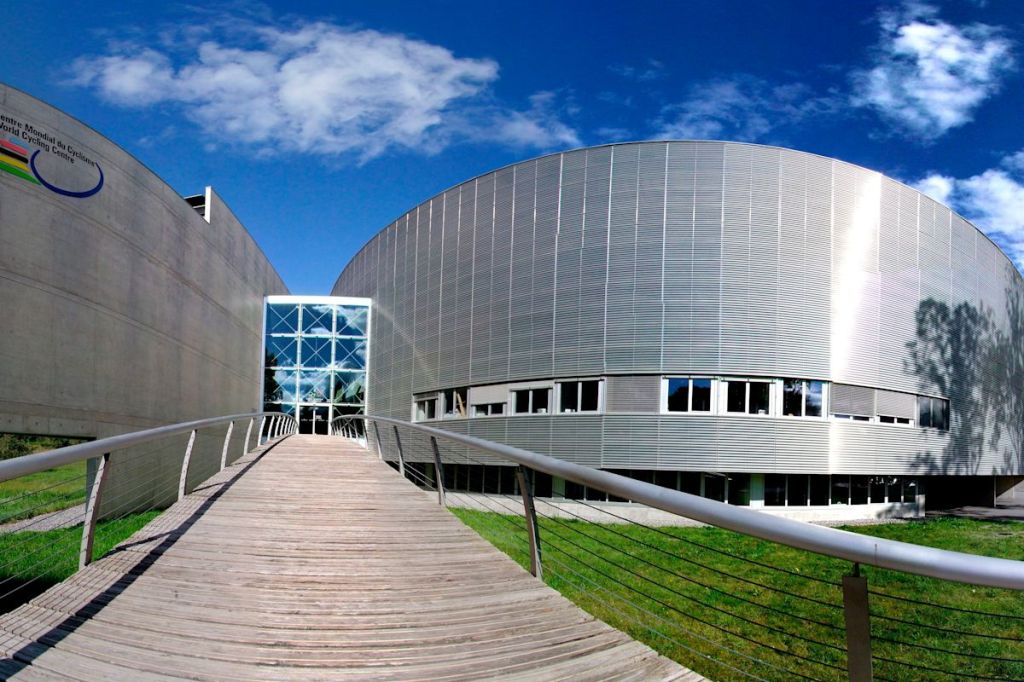
Image credit: Union Cycliste Internationale
The legal forum that riders are most likely to find themselves before if they ever have a dispute with their team is the UCI Arbitral Board (the “Arbitral Board”). This article explains how the Arbitral Board operates, both procedurally and substantively, under the latest UCI Regulations (Part XII, Chapter VII, version 20 June 2025).
The aim of this article is to demystify the process and help riders to understand what to expect from an Arbitral Board proceeding.
Jurisdiction and Role of the Arbitral Board
One of the most common types of dispute that may fall within the Arbitral Board’s jurisdiction is disputes over employment contracts between riders and teams. The jurisdictional framework governing those disputes varies slightly across the men’s and women’s disciplines, but in all cases, the UCI Regulations (and in the case of Men’s WorldTour and ProSeries, the CPA/AIGCP Joint Agreement) impose requirements on where such matters can be litigated or arbitrated.
For riders in UCI Men’s WorldTeams and ProTeams a rider or team may only submit such disputes to the Arbitral Board, the arbitral tribunal of the rider’s National Federation, the Court of Arbitration for Sport (CAS), or the civil courts of the rider’s place of residence (without prejudice to the compulsory jurisdiction of ordinary courts). Riders employed by UCI Women’s WorldTeams and ProTeams may only submit such disputes to the Arbitral Board, the arbitral tribunal of the rider’s National Federation, or CAS (again, without prejudice to the compulsory jurisdiction of ordinary courts). At lower tiers of competition, such as UCI Continental Teams, the contractual and regulatory formalities are more relaxed. Nonetheless, standard UCI contract templates still apply, and provide for arbitration.
Where the parties have not expressly designated a forum (from the permitted options), the Arbitral Board will have default jurisdiction, and “in case of doubt” the competence of the Arbitral Board is presumed (Art 12.7.008).
However, the Arbitral Board’s remit is expressly limited in several ways. It does not handle disciplinary matters or doping cases, matters of safety and the conditions of sport, or disputes specific to major events like World Championships or the Olympics – all of which are handled by other judicial bodies.
Finally, it is worth noting that a decision of the Arbitral Board is not necessarily the end of the road for a dispute. The UCI Regulations allow any party dissatisfied with an Arbitral Board ruling to appeal to the CAS. We will discuss CAS appeals in more detail later.
Composition and Independence of the Arbitral Board
The Arbitral Board is constituted by the UCI Management Committee, which appoints a President of the Board and a roster of arbitrator members. Those appointed must be independent of the UCI; they cannot hold any other UCI function, be UCI employees, or serve on UCI commissions (except that they may simultaneously be members of the Disciplinary Commission). This is intended to ensure the arbitrators are neutral. The President of the Arbitral Board serves a term (no more than two four-year terms in total) and oversees the administration of cases.
When a case is filed, it is typically heard by a panel of three arbitrators. Each party (claimant and respondent) is entitled to appoint one arbitrator from the Arbitral Board’s list, and then the President of the Arbitral Board appoints the third member who will act as the President of the Panel (the chairperson).
However, not all disputes will necessitate a three-member panel. The Arbitral Board procedure provides for sole arbitrators in certain situations. If both parties agree, they can have their case heard by a sole arbitrator (selected by agreement, or by the Board’s President if the parties cannot agree on who to choose). Additionally, the President of the Arbitral Board can unilaterally decide to appoint a sole arbitrator for particular cases – especially urgent matters or those of smaller monetary value (defined as disputes involving less than CHF 50,000). The rationale is efficiency: a simpler, lower-stakes case might not require the combined efforts of three arbitrators.
In practice, many rider-team contract disputes might be suitable for a sole arbitrator if both sides prefer a faster resolution, whereas cases with higher stakes might warrant a three-member panel.
Procedural Steps Before the Arbitral Board
Proceedings before the Arbitral Board are designed to be flexible to the needs of the dispute. To set out the process from the perspective of a rider bringing a claim:
1. Filing the Petition
A case is started by filing a written petition to the Arbitral Board (with a copy to UCI headquarters). This petition is essentially a statement of claim. The Arbitral Board rules provide that this document must include certain key information as set out at Art 12.7.016. If the petition is missing mandatory elements, it shall be deemed invalid, so riders should ensure their initial filing is thorough and meets all the formal requirements.
Once the petition is received, the UCI Secretariat will notify the respondent by sending them a copy of the petition and its enclosures.
2. Selecting the Panel
As already noted, the claimant must nominate their arbitrator when filing their petition. The respondent will then be given a deadline by the Board’s President to nominate their arbitrator in response. Once those arbitrators are in place, the President of the Panel is appointed.
At this stage, arbitrators are also subject to checks on conflicts of interest. Any arbitrator with a personal interest in the case must withdraw. If there is a dispute about an arbitrator’s impartiality or the panel’s composition, the President of the Arbitral Board will rule on the matter. This is similar to the procedure for challenging arbitrators in other forms of arbitration, with the aim of ensuring that the panel is not tainted by bias. A party will therefore be able to object if, say, the other side’s chosen arbitrator has an obvious conflict of interest.
3. Initial Procedure and Time Limits
Once the panel is constituted, the President of the Panel takes over case management. They will set a deadline for the respondent to submit their response to the petition (their defence to the claim, which can include any counterclaims), and a deadline for the claimant to reply to that response.
The UCI rules do not prescribe rigid timelines; instead, they leave it to the panel (or in urgent cases, the Arbitral Board President) to fix appropriate time limits for each case. In practice, this means the schedule will depend on the dispute’s complexity and urgency. In a straightforward contract claim, the respondent might be given a few weeks to respond, and the claimant a similar period to reply. In a very urgent matter (imagine a rider seeking an emergency injunction to be allowed to start a race), the President of the Panel could expedite the timeline or even decide to hear it at short notice.
There is a strong emphasis on respecting deadlines: any brief or evidence submitted late “shall not be taken into account” by the panel unless all parties agree or the President of the Panel, exceptionally, permits it.
During this written phase, a party must identify its witnesses or experts by the time of its last written brief. However, if one side names witnesses or experts, the other side automatically gets the right to add their own witnesses or experts on the same point(s), even if that means introducing them after their last brief (they must do so as soon as possible upon learning of the first side’s witnesses). Again, once the written phase is closed, no new arguments or evidence may be introduced unless the panel specifically asks for more information.
The panel also has the authority to order, of its own accord, additional fact-finding measures. They can, for instance, request documents, summon witnesses, or seek additional expert evidence.
4. Conciliation Efforts
The Arbitral Board also has a mandate to seek to resolve disputes through conciliation. Arbitrators can take appropriate measures to facilitate a settlement at any time during the process. This might, for example, involve the President of the Panel acting as a mediator between the parties or suggesting a pause in proceedings for negotiations. If the parties do reach an agreement, the rules permit the Arbitral Board to issue a formal decision recording the settlement (turning the settlement into an enforceable award).
In practice, these conciliation attempts can significantly affect the timeline. A recent(ish) example involved rider Rohan Dennis’ dispute with his former team over the termination of his contract. The Arbitral Board case, filed in late 2019, stretched into mid-2020 in part because the UCI pushed for conciliation, reportedly making two separate attempts to broker a settlement between Dennis and Bahrain. Only after conciliation failed did the Arbitral Board conclude the matter with a decision (which ultimately dismissed Dennis’ claims).
5. The Hearing
There is no absolute right to an oral hearing before the Arbitral Board. The decision to convene a hearing rests with the panel, which may determine that a particular case can be resolved solely on the basis of the written submissions and evidence (although the panel will consult with the parties and seek their consent before pursuing that course of action).
In practice, however, while the Arbitral Board process does not guarantee an oral hearing in every case, in our view it would be unusual to refuse an oral hearing where a party has expressly requested one, unless the case turns purely on documentary evidence or legal interpretation.
By default, Arbitral Board hearings are held in public. The panel can however close the hearing to the public if it grants a party’s request for privacy.
Hearings are usually held at UCI Headquarters in Aigle, Switzerland. However, the panel has discretion to choose a different venue if more appropriate and nothing in the rules prohibits holding hearings via videoconference
Procedurally, each party has the right to be represented by a lawyer or other representative of their choice. In practice, riders would be well-advised to engage a lawyer experienced in sports arbitration. Whilst the rules allow any representative, the legal and procedural complexity of arbitration usually calls for someone familiar with that area.
At the hearing, each party is given the opportunity to present their case, and any witnesses or experts that the parties have identified in their briefs are heard and questioned. Typically, there will be opening statements, examination of witnesses and experts (including cross-examination by the other side’s lawyers), and closing arguments. The panel can also pose questions at any time.
One important thing to flag is that if a party, despite being notified of a hearing, fails to attend, the panel may decide to nonetheless proceed in that party’s absence. This rule prevents a respondent from derailing the process by simply ignoring it.
6. The Award
After the hearing (or after the last submission if there is no hearing), the panel will deliberate and issue a written decision (the award). The decision is by majority vote if the panel is composed of three. The award must be reasoned.
The rules of the Arbitral Board allow for decisions to be announced in two stages: the operative part of the award (the outcome) first, without any reasoning, with a full reasoned award issued at a later date.
Costs and Fees
The Arbitral Board’s decision will typically include a section on the costs of the procedure, i.e. the costs of the Arbitral Board itself including the arbitrators’ fees. The panel has discretion in allocating these costs between the parties. The usual principle that the loser pays applies, but the panel may also consider the specific circumstances of the case. For example, if a rider wins but had acted unreasonably in some respects, the panel might still make them bear part of the costs of the procedure.
A party can also request the panel to order that the other party make a contribution towards their legal costs.
The Language of the Arbitration
The official languages for proceedings are English or French. The initial petition must be in one of those two languages, and whichever language the petition is in will become the language of the arbitration (unless the parties agree to change it, or the panel orders otherwise).
All submissions and documents should then be in that language (or accompanied by a translation), otherwise the panel may declare them inadmissible.
If evidence is in another language, the panel can require translations. At hearings, interpreters can be used, but that will be at the relevant party’s expense.
Appeals to CAS and Standard of Review
After the Arbitral Board issues its decision, any party who is dissatisfied with the outcome can appeal to the CAS. The UCI rules grant a 30-day window from receipt of the Arbitral Board’s fully reasoned decision to file a CAS appeal.
Any appeal to CAS will be de novo. That means that the whole case will start again at CAS, with new arguments and new evidence being permitted, and with the CAS not being required to respect the Arbitral Board’s decision in any way
Enforcement of Arbitral Board decisions
A decision of the Arbitral Board carries binding force within the structures of cycling. The UCI Regulations impose strict compliance obligations on all persons and entities subject to its jurisdiction.
Once the Arbitral Board issues a decision – including by recording a settlement reached between the parties – that decision is final and immediately enforceable, subject only to any appeal to the CAS. Absent a pending appeal, parties are required to promptly comply with the decision.
The internal enforcement mechanism for Arbitral Board decisions has significant consequences. Any person, organisation, or body that fails to implement an Arbitral Board decision fully and without delay faces automatic suspension from the sport (see Article 12.7.005 of the UCI Regulations). This suspension takes effect by operation of the rules and does not require a separate disciplinary process or further decision by UCI authorities. The suspension remains in place until the decision is fully implemented. Thus, the UCI leverages participation rights as a means to compel compliance with internal tribunal decisions.
It is important to recognise that enforcement of Arbitral Board decisions occurs within the internal regulations of the sport. Thus, the Arbitral Board does not have coercive enforcement powers as a national court would, such as the ability to seize assets. However, the practical consequence of suspension provides a powerful deterrent against defying an Arbitral Board decision.
Nevertheless, if necessary, an Arbitral Board award could, in principle, be enforced externally as an arbitral decision under Swiss law.
Conclusion
In short, the Arbitral Board is a specialised arbitral forum tailored to the needs of professional cycling. It offers riders and teams a path to resolve disputes efficiently and (relatively) cheaply, backed by the force of the sport’s governing body.
For riders, agents, and teams, the key is to keep good records of contracts and communications, act promptly if a dispute arises, and engage lawyers who are familiar with sports arbitration. However, irrespective of what representation they choose, by knowing what to expect from these procedures, parties can navigate disputes with far greater confidence and effectiveness, allowing everyone to focus on what really matters – the battle on the road.
Words: Nick Williams and Tom Seamer

 Cycle Counsel
Leave a comment